
Emotions Are Not the Enemy
Understanding the Purpose of Our Core Feelings
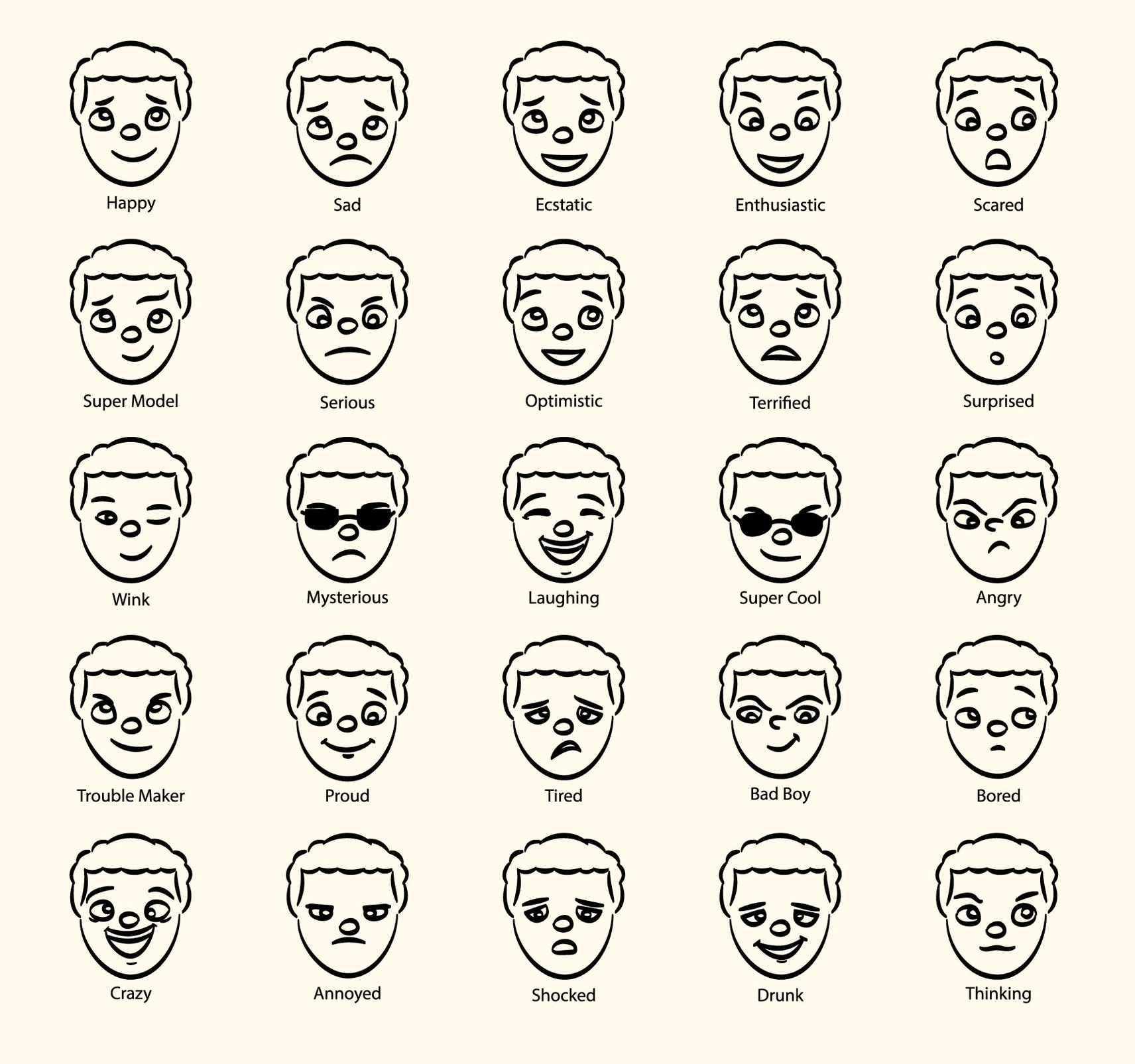
“Most of us think of ourselves as thinking creatures that feel, but we are actually feeling creatures that think.”
~ Jill Bolte Taylor, My Stroke of Insight: A Brain Scientist's Personal Journey
Emotions are the first and arguably most important tools we have.
They’re information and language that so many of us haven’t been brought up knowing how to interpret or speak. In fact, it’s not unlikely that you’ve been specifically conditioned to avoid a lot (most?) of your emotional experience and to stifle your emotional expression. Instead of teaching us how to manage and express our emotions, the culture I grew up in (United States, Texas, white, middle class, etc.) tends to villainize emotional parts of ourselves because they can be uncomfortable, messy, misinterpreted, and misused. But emotions don’t go away. We don’t have that kind of power. Instead, they build up, mutate, leak out sideways, implode, or explode, feeding back into the unfortunate narrative that they are bad… and that we, by extension, are also bad for having them. To be frank, that sucks.
All of our emotions are purposeful and critically important, so I'm here to give you an outline of their purpose. With that said, this is not a deep dive. How to interpret, utilize, and express emotions is a whole other level of processing with a lot more nuance. And now, it's time to get all
Inside Out on you all with an emotional primer.
Anger is the alarm that motivates us to fight for or against something.
When you’re acting on your anger, what are you fighting for? Is your fight style working to invite what you want?
Disgust and pain inform us to avoid things that can hurt us or make us sick, both morally and physically.
If something hurts or you’re disgusted, get curious about that feeling.
Fear is our anticipation of or response to a perception of danger.
It advises caution, and, by the way, there’s no such thing as courage without it.
"Courage is knowing it might hurt, and doing it anyway.
Stupidity is the same.
And that's why life is hard."
I love this statement by Dr. Jeremy Goldberg because it makes me laugh and nod my head, AND because it underscores our lack of skill in interpreting and speaking the language of emotion that’s innate to our existence. That’s not to say we’ll always get the outcomes we want when we get more fluent in our first language, but things can start to make more sense.
Joy and pleasure are rebellion when the world is screaming to take cover, hide, conform. Joy and pleasure are motivation and meaning. They are the life force.
Sadness is grief and connection. It speaks for what we care about, what’s important, what hurts, and the human need to be seen and comforted.
Surprise grabs our attention, pulls us from habituation and complacency and reorients us to what might need attention.
My point is this: While imperfectly calibrated at this point in our evolution, emotions are still the oldest, most deeply human guidance system we have. Sure, they aren’t always accurate reflections of what may actually, factually be happening right at the moment we feel them, but we can count on them to reliably reflect
perception, history,
and
meaning. Feelings, even the uncomfortable ones, are not an enemy or a problem to solve. They're an integral part of our humanness. Accepting their existence doesn’t mean letting them drive the bus, dictate absolute truth, or behave with unbridled, weaponized expression under the pretext of “honesty.” It means self and relational awareness, and developing a working relationship with emotions from a place of curiosity, compassion, and responsibility to both ourselves and others. In doing so, we’re better equipped to make choices that align with our values, care for our relationships and community, and tend to ourselves with less shame, uncertainty, and chaos, and more responsibility, clarity, and relational empowerment.
If this resonates,
Hi, human.
Learning to work with emotions is a process and a skill, not a character trait, and therapy is one support option when you're ready. It can offer structured, compassionate support for understanding emotional patterns, cultivating values-oriented regulation*, and creating more clarity and connection in your relationships. If you’re curious about support,
I'd love to be of service.
P.S. "Regulation" and "regulated" don't invariably mean cool, calm, and collected. It just means your emotions and their expression are congruent with the circumstances. Regulation means we have a matching pair or a coordinated set.